Fencing That Handles Open Land and Livestock
Farm and Agricultural Fencing in Youngsville for properties requiring secure boundary lines and livestock containment
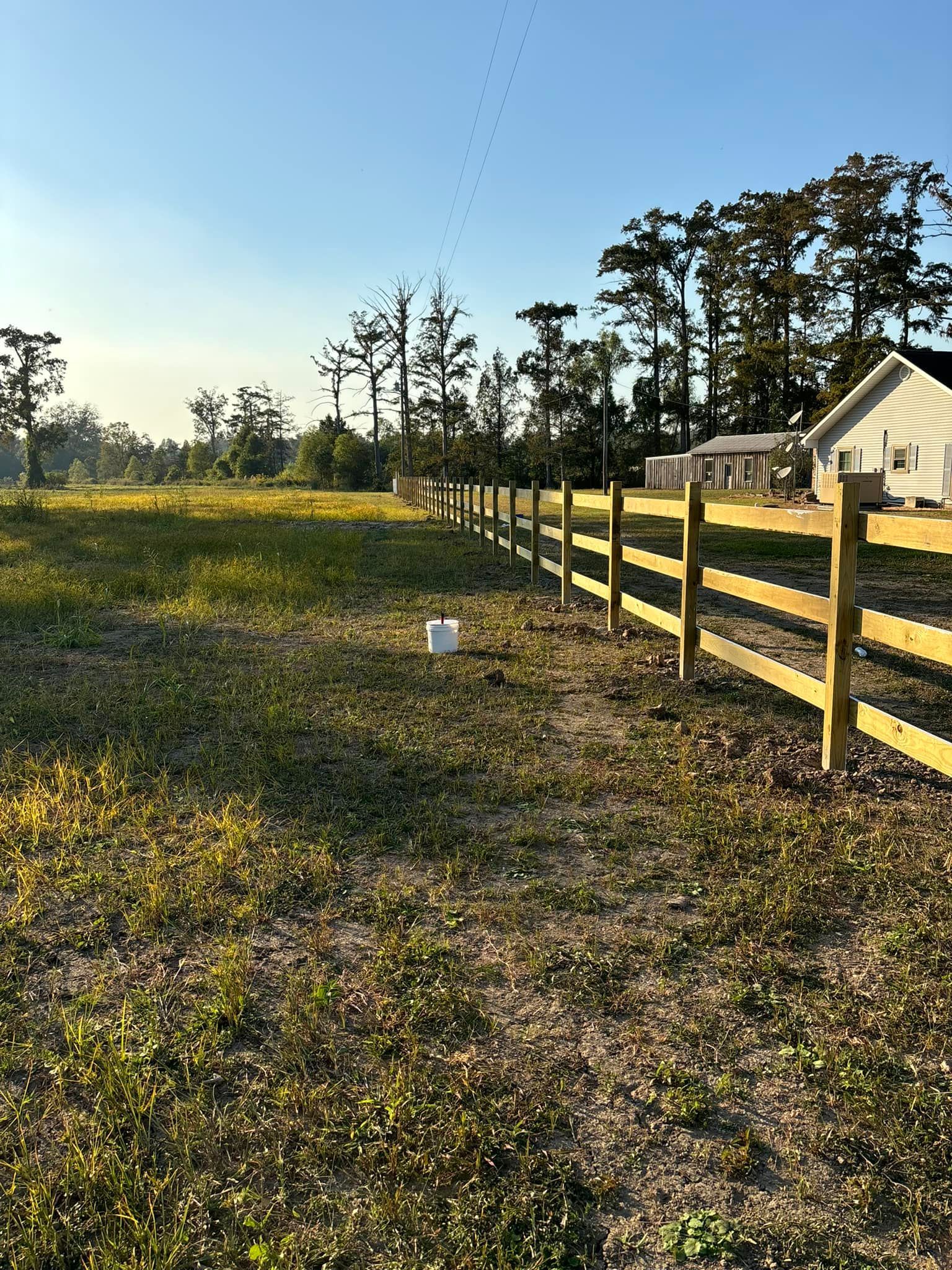
Everpro Fence & Construction builds farm fencing for larger properties where land boundaries and livestock control require strong, reliable materials installed across wide areas. The work addresses the specific demands of rural and agricultural properties in Acadiana, where terrain often shifts and fence lines may span acres rather than yards. Proper spacing and structural integrity determine whether livestock stay contained and property lines remain clearly defined over years of use.
This service involves installing fencing designed to handle uneven terrain and open land conditions, using materials built for long-term durability under weather exposure and animal pressure. Posts are set with proper depth and spacing to maintain tension and stability, while wire or rail configurations are selected based on the type of livestock or boundary application. Experience working on rural properties means understanding how soil conditions, drainage patterns, and access limitations affect installation.
Schedule a property evaluation to review your land layout and fencing requirements.
What Proper Farm Fencing Requires
Farm fencing installation begins with walking the property to identify terrain challenges, existing access points, and the specific containment needs based on livestock type or boundary purpose. Posts are placed at intervals that account for distance, ground conditions, and the load the fencing will carry, whether that's barbed wire tension or board rail weight. Each post is set deep enough to resist frost heave, moisture shift, and the lateral pressure from animals testing the fence line.
Once the fence is installed, you'll notice livestock no longer push through weak sections or find gaps along property edges. Gates open and close without sagging, wire maintains consistent tension without drooping, and corner posts hold firm under the pull of long stretches. The fence line remains visible and functional across the property, even where the ground slopes or dips.
This work also includes repair services for existing farm fences where posts have rotted, wire has loosened, or sections have been damaged by fallen limbs or vehicle contact. Repair often focuses on replacing compromised posts and restoring structural integrity without needing to rebuild the entire line. Honest assessment helps determine whether selective repairs extend the life of your fence or whether full replacement delivers better long-term value.
Answers to Frequent Service Questions
Farm fencing projects raise practical questions about materials, installation across varied terrain, and maintenance requirements over time.
What materials are used for farm and agricultural fencing?
Wire options include barbed wire for cattle containment and woven wire for smaller livestock, while board rail fencing works well for horses and decorative boundary applications. Material choice depends on the type of livestock, the purpose of the fence, and the terrain conditions across your property.
How is fencing installed on uneven or sloped land?
Posts are set to follow the natural grade of the land, with adjustments made to maintain consistent height and tension along the fence line. In areas with significant slope, stepped sections or contoured wire placement keep the fence functional without gaps at ground level.
When should I repair versus replace an existing farm fence?
Repair makes sense when posts are still solid and only sections of wire or board need attention, but replacement becomes necessary when multiple posts have rotted, the fence line has shifted out of alignment, or the structure no longer holds livestock reliably.
What affects the cost of farm fencing in Youngsville?
Distance, terrain accessibility, material type, and the number of gates or corners all influence cost, along with whether the installation requires clearing brush or navigating around existing structures like ponds or tree lines.
How long does farm fencing typically last?
Treated wood posts generally last fifteen to twenty years depending on soil moisture and drainage, while wire can remain functional for decades if tension is maintained and repairs are addressed promptly when damage occurs.
Everpro Fence & Construction provides both new installations and repairs for agricultural properties throughout Acadiana, with experience working on open land and uneven terrain. Request an on-site consultation to review your property layout and discuss material options that fit your land use and budget.